COMPOSER · STORYTELLER · EDUCATOR
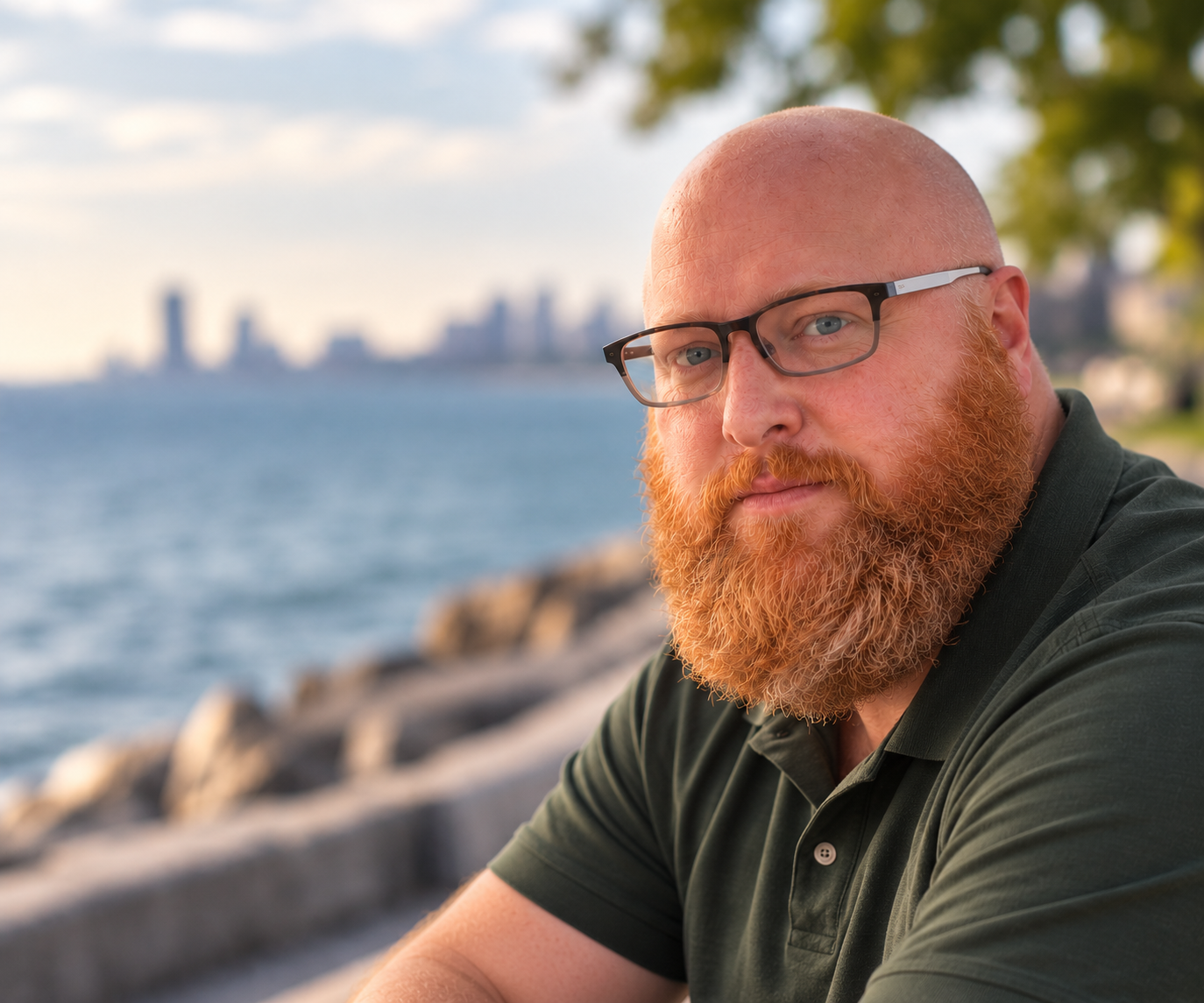
Daniel Clingman is a Chicago-based composer and educator whose work moves between music, film, theatre, performance, and the classroom.
My work begins with story.
I compose music for film, theatre, performance, and other narrative media, drawing on a background that spans composition, orchestration, sound, technology, dance, and theatre. As an educator, I bring those same ideas into the classroom, helping students understand how music creates character, shapes emotion, establishes place, and communicates beyond the notes themselves.
Across both practices, I am interested in the same question: What story are we telling—and what can music do that nothing else can?
MUSIC WAS ALWAYS AT THE CENTER OF THE STORY
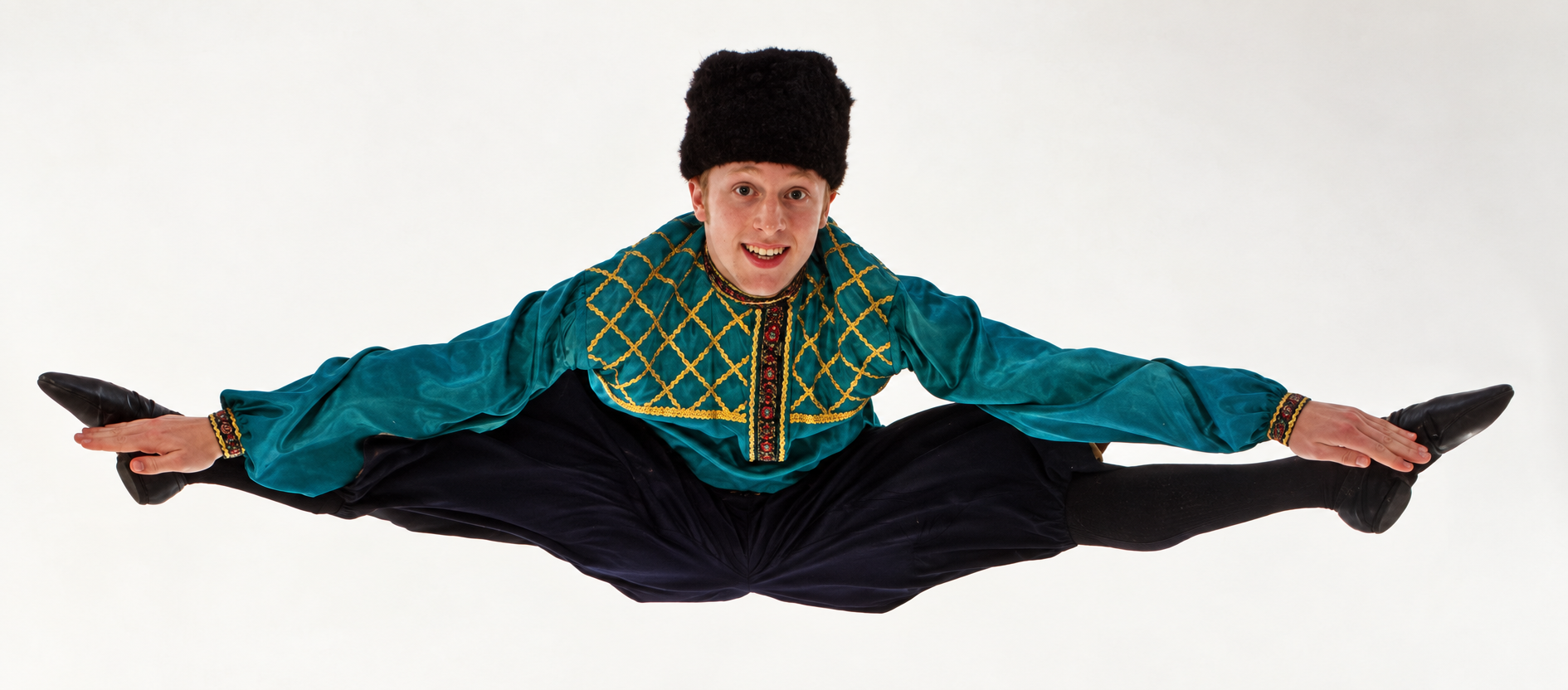
My first life in the arts was in motion. In the spring of 1987, at six years old, I performed alongside my aunt Denise in A Midsummer Night's Dream, playing the human child fostered by Titania. That fall, I began studying on scholarship at the School of Grand Rapids Ballet under Robert Estner and Charthel Arthur.
Ballet quickly became much more than an after-school activity. I joined the Grand Rapids Ballet Junior Company at nine and began performing with the Senior Company at twelve. By sixteen, I was taking on senior roles and working at what other companies might have called an apprentice level, including the Lead Russian Dancer in The Nutcracker. Full scholarships brought me to New York for summer study at the Joffrey Ballet School in 1997 and 1998, and in 1998 I became a full company member of Grand Rapids Ballet, dancing lead and featured roles in the company's repertoire.
But even then, dance was only one way I was experiencing music.
Throughout those years I sang in school and church choirs. As a teenager I began playing piano and guitar, performed in musical theatre both at school and in community productions, including Jesus Christ Superstar at Circle Theatre, and started experimenting seriously with composition. Discovering notation software and MIDI hardware gave me something I had not had before: a way to hear musical ideas beyond the instruments I could play myself. I began writing for orchestra while still in high school.
By 1998, while dancing professionally, I was already developing ideas for a narrative ballet based on Robin Hood, alongside other experiments in composition. I didn't know that I would still be developing that work decades later, or that composition would eventually become the center of my professional creative life. But the connection was already there: movement, character, dramatic structure, and music were different parts of the same act of storytelling.
From
Stage
to
Studio
In 1999, I came to Chicago to study theatre and music at Loyola University Chicago. My path through college also included a semester at Columbia College Chicago studying musical theatre performance and composition, but those years opened another side of storytelling to me. I became as interested in what happened behind the curtain as what happened in front of it.
At Loyola, I worked across performance, sound design, and stagecraft. Those experiences led to work in Chicago theatre as run crew, stage manager, sound designer, and lighting designer, and eventually to becoming part of Speaking Ring Theater Company. With Speaking Ring, many of those interests began to converge. I created original music and sound design for productions including The Woolgatherer and No Exit, exploring ways music and sound could become part of the dramatic environment rather than simply accompany it.
Theatre also led somewhere unexpected: Shedd Aquarium. Through connections made at Speaking Ring, I joined Shedd’s Interpretive Guest Services staff, where performance, education, and public engagement intersected. I helped develop and perform interpretive theatre and created original music for presentations and events, including the 2003 grand opening celebration for Wild Reef: Sharks at Shedd. It was another way of discovering what music could do for a story: not only shaping character and drama, but helping an audience experience a place.
Film was becoming part of that exploration as well. After an earlier short-film project, I composed for Bowser Makes a Movie, my second film and first feature. It became my first IMDb credit and an early opportunity to bring the instincts I had developed in theatre into music written specifically for picture.
At the same time, my own music was becoming more personal.
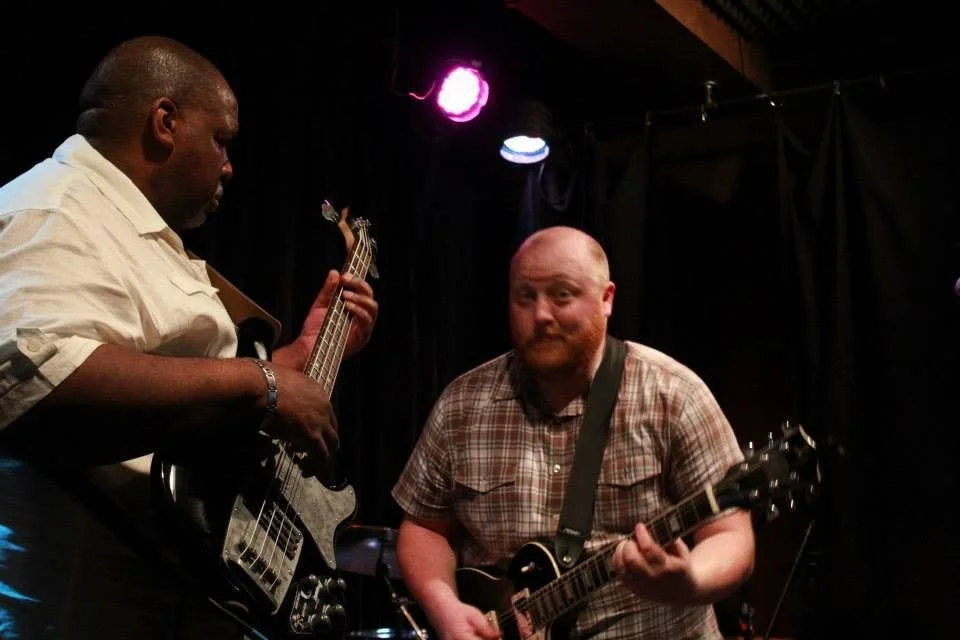
As I married and began raising a family, songwriting became the center of my creative work for a number of years. I wrote and recorded two albums, performed in clubs and bars throughout Chicago, and fronted a band. Guitar, piano, voice, arranging, recording, and performing offered a different kind of musical education. Instead of supporting someone else’s character or story, I was learning how to build one from a song.
I joined Chicago Public Schools in 2007, initially working in technology, and much of what I had learned in professional theatre followed me into the schools. Sound, lighting, staging, projection, and live production became part of performances, assemblies, and events. The setting had changed, but the work still drew on the same combination of music, technology, performance, and storytelling.
In 2014, I returned more deliberately to a path I had first begun exploring years earlier, enrolling at Berklee College of Music to study composition for film, television, and games.
It was not the beginning of my life as a composer so much as a recommitment to the part of my creative life that had been there all along.
Composition
in
Focus
At Berklee, composition became the focus of my formal study. I worked across contemporary composition, orchestration, film and media studies, world music, harmony, arranging, and the craft of writing music to picture. Ideas I had been exploring intuitively since high school now had a larger vocabulary behind them: new approaches to harmony and structure, a deeper understanding of the orchestra, and new ways of thinking about the relationship between music, image, character, and narrative.
I was studying while continuing to work full-time in Chicago Public Schools, moving to Jose de Diego Community Academy in 2015 as its Technology Coordinator. The two worlds often overlapped. Technology had long been part of how I made music, from the MIDI hardware and notation software I discovered as a teenager to the increasingly sophisticated tools of a modern composition studio. At Diego, that same combination of technology, sound, and production continued through performances, assemblies, and school events.
Berklee also gave me room to write beyond the immediate needs of a production. I composed for orchestra and chamber ensembles, studied music from different traditions, and continued developing my own musical language alongside the practical demands of scoring for screen. Composition was becoming not simply something I did for a particular film, play, or song, but a discipline I wanted to understand more deeply.
In 2020, study and practice came together in an unexpected way.
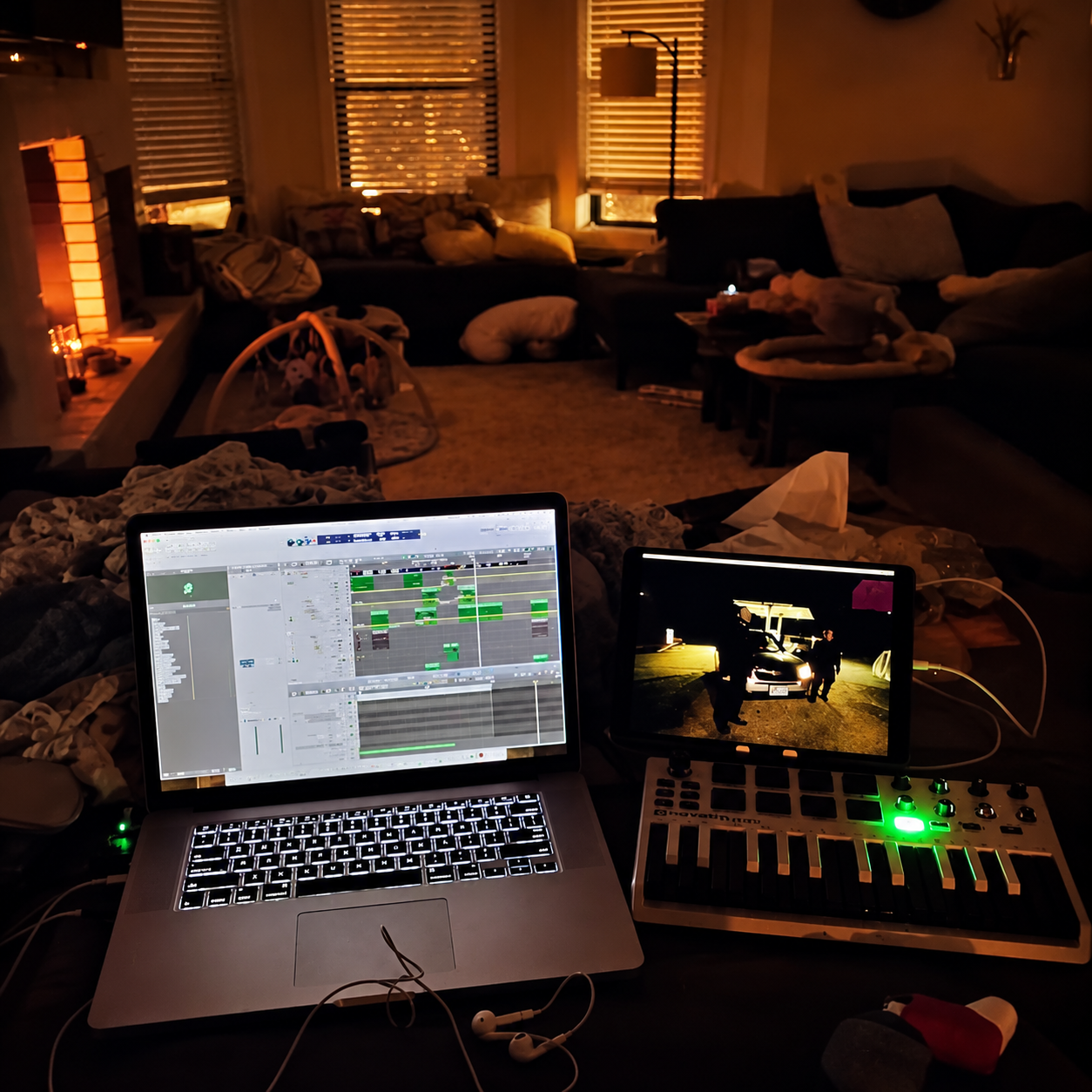
During the first months of the COVID-19 lockdown, I created Quarantine as my Berklee capstone. With its actors isolated from one another and filming themselves on their phones, the short film had to be assembled from fragments: separate performances, separate spaces, image, editing, sound, and music brought together to create a shared story. I wrote and directed the film as well as composed its score, making it an unusually complete expression of the different creative and technical roles I had accumulated over the years.
Film composition was returning to the center of my work beyond Berklee, too. I began working again with filmmaker Matthew T. Price, starting a collaboration that would continue across a series of short films. That same year, Sean Patrick Leonard, a friend from my years with Speaking Ring Theater Company, directed Closed for the Weekend, and I composed the original score. Nearly two decades after our work together in Chicago theatre, we were telling stories together in a different medium. The score received Best Score/Soundtrack at the Red Dirt International Film Festival.
I completed my Berklee degree in June 2020, graduating cum laude with a Bachelor of Professional Studies in Music Composition for Film, Television, and Games. At almost the same moment, another part of my musical life was changing. I moved from technology into teaching music at Diego, beginning remotely during the pandemic, continuing through hybrid learning, and eventually returning with my students to the classroom.
For the first time, the ideas I had spent years exploring as a performer, songwriter, designer, and composer were becoming the ideas I was asking students to explore for themselves.
Teaching music did not pull me away from composing. It made me think more deeply about what composition actually does.
As I began teaching music full-time, I found myself returning to the same ideas that had followed me through ballet, theatre, songwriting, film, and scoring: music creates character, shapes emotion, establishes place, organizes time, and gives an audience a way into a story. Those ideas became the foundation of my classroom. Students listened for them in film scores, musicals, ballet, popular music, and concert works, then experimented with using them in music of their own.
At the same time, I continued composing for film and other media. My ongoing collaboration with longtime friend and filmmaker Matthew T. Price produced a growing body of short-film scores, while other projects continued to let me explore the relationship between music, image, character, and narrative. The classroom and studio increasingly became two sides of the same practice: ideas I explored as a composer informed my teaching, while explaining those ideas to students forced me to understand and articulate them more clearly myself.
MUSIC IS STORYTELLING
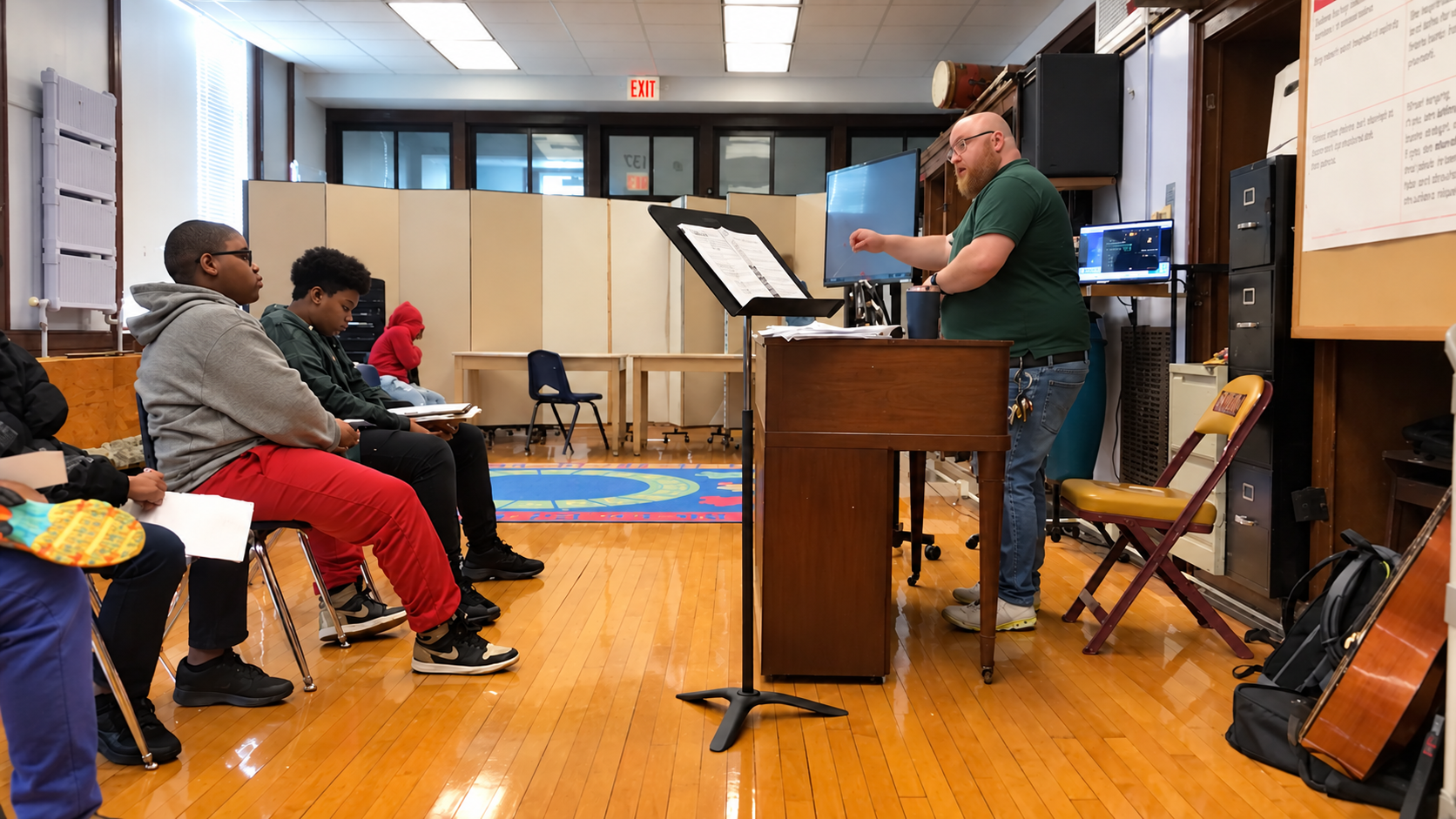
Teaching eventually brought me back to school, too.
Graduate study in music education gave me the opportunity to examine that relationship more deliberately. My master's work culminated in Music is Storytelling: Developing Narrative-Centered Curriculum for General Music Education, a curriculum built around an idea that had been present throughout my own life in music: students can understand music more deeply when they understand what it communicates, and they can learn to create music by thinking about the stories they want it to tell.
That work brought together composition, listening, performance, technology, film, theatre, and student creation. It also clarified something for me. I had spent years moving among disciplines that can look unrelated on a résumé—dancer, performer, designer, songwriter, composer, technologist, and teacher—but I had never really been moving away from one thing toward another.
I had been approaching the same thing from different directions.
Today, I work as both a composer and educator. I am interested in music written for picture, stage, performance, and other narrative contexts; in the technologies that allow those stories to be built; and in helping developing musicians discover how musical choices can communicate something beyond the notes themselves.
From the ballet studio to the theatre, from clubs to film sets and scoring sessions, and from my own studio to the classroom, the question has remained remarkably consistent:
What story are we telling—and what can music do that nothing else can?
Reflecting Me · Class of 2021 Graduation Song · Jose de Diego Community Academy
Students answered one question—How will you change your world?—in six words. I shaped their six-word stories into lyrics, composed and produced the song, and recorded a guide track. Students recorded their performances at school or remotely from home during hybrid learning; I then mixed the audio and edited the final music video, shared with families and presented as part of their socially distanced graduation.
Originally published by Jose de Diego Community Academy.